
Signs Your Tap Water Is Contaminated (And What To Do)
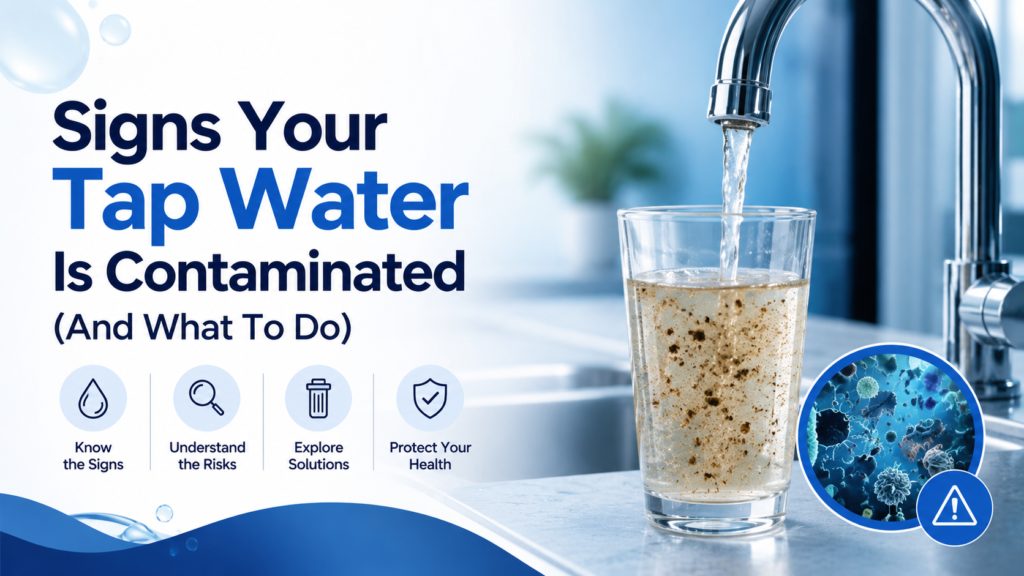
Your water may look perfectly clear and still carry invisible killers. Conversely, yellow-tinted water might simply contain harmless iron deposits. Learning to read the signs of water contamination — both obvious and subtle — is an essential life skill in India, where water quality varies enormously by location, season, and infrastructure age.
 |
Visual Signs of Contamination
1. Yellow, Brown, or Orange Tint
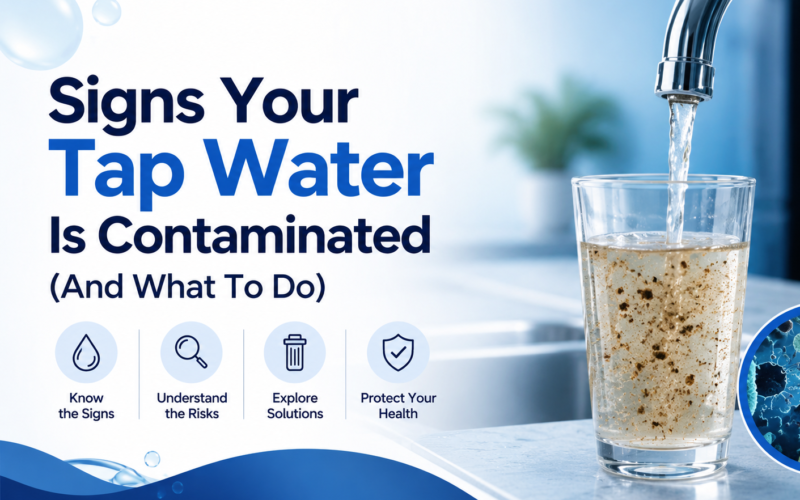
Yellowish water most commonly indicates iron or manganese contamination, or rust from old pipes. While iron itself is not immediately dangerous at moderate levels, it creates an environment where bacteria thrive. Brown water after rain often indicates increased sediment and turbidity in the source supply.
2. Cloudy or Milky Appearance
Cloudy water can have two causes: dissolved air (harmless — clears in seconds when water is poured into a glass) or suspended particles and bacteria (potentially harmful — cloudiness does not clear). Test by filling a glass and waiting 2 minutes; persistent cloudiness warrants concern.
3. Oily Film or Sheen on Surface
An iridescent film floating on still water indicates organic compounds or petroleum products — a serious contamination sign, especially near industrial areas or petrol stations. Do not use this water for any consumption purpose.
| Water Colour and Contamination Chart Colour swatches from clear to brown with corresponding contamination types and severity levels |
Smell-Based Warning Signs
4. Rotten Egg Smell (Hydrogen Sulphide)
The classic ‘rotten egg’ smell is caused by hydrogen sulphide gas (H2S) dissolved in water. This occurs in groundwater from sulphur-reducing bacteria or geological sulphur deposits. While low levels are not immediately toxic, the smell indicates bacterial activity and the presence of potentially harmful compounds.
5. Chlorine or Bleach Smell
Some chlorine smell in municipal water is normal — it is a deliberate disinfectant. However, an unusually strong chemical or bleach odour may indicate over-chlorination, which can form disinfection by-products (DBPs) like trihalomethanes that are carcinogenic with long-term exposure.
6. Metallic Taste or Smell
A metallic taste typically indicates elevated iron, copper, manganese, or lead. Lead contamination is particularly dangerous — it has no taste threshold most people can detect, but causes serious neurological damage, especially in children. Areas with old lead pipes are at highest risk.
Health Symptoms That May Indicate Water Issues
- Recurring stomach upsets, diarrhoea, or nausea with no food cause
- Frequent skin rashes or irritation — especially when bathing
- Multiple family members falling ill simultaneously
- Persistent gastroenteritis in children (often misattributed to food)
- Dental fluorosis (brown spots on teeth) in children — indicates high fluoride
Laboratory-Confirmed Contamination Signs
| Contamination Type | Visible Sign | How to Confirm | Health Risk |
| Bacterial (E. coli) | None (water looks clear) | Lab test — H2S presence test kit | Diarrhoea, cholera, typhoid |
| Arsenic | None | Arsenic field test kit or lab | Cancer risk, neurological damage |
| Fluoride excess | None — dental fluorosis in children | Fluoride test kit (Rs 200) | Dental/skeletal fluorosis |
| Lead | Slightly metallic taste | Lab heavy metal panel | Neurological damage, especially children |
| Nitrate | None | Nitrate test strip (Rs 100–200) | Blue baby syndrome in infants |
| Iron excess | Yellow/orange tint, staining | Iron test kit | Promotes bacterial growth, taste issues |
Immediate Actions If You Suspect Contamination
- Stop drinking tap water immediately — switch to bottled water while investigating
- Do not boil water to remove chemical contamination — it concentrates dissolved chemicals
- Test your water with a home test kit (Rs 200–800) for quick indicators
- Submit a sample to a certified water testing lab for comprehensive analysis
- Report to your local municipal corporation / water utility in writing
- Install a certified RO purifier rated for your specific contamination type
| Water Contamination Testing Kit Photo of home water testing kit with all included test strips, vials, and colour charts laid out |
Frequently Asked Questions (FAQ)
Schema Markup Note: Implement the FAQPage schema (JSON-LD) for Google rich results and AI Overviews eligibility.
Does boiling water remove all contaminants?
No. Boiling water effectively kills bacteria and viruses (very effectively at rolling boil for 1 minute, or 3 minutes above 2000m altitude). However, boiling does NOT remove chemical contaminants, heavy metals, TDS, fluoride, arsenic, nitrates, or dissolved organic chemicals. In fact, boiling concentrates some dissolved chemicals as water evaporates.
How do I know if my area has water contamination issues?
Check your municipal water quality report (most municipal corporations publish annual water quality data). Look up your district on the CGWB (Central Ground Water Board) contamination mapping portal. Check the India Water Tool (iwt.water.org) for your area’s contamination profile. Local NGOs like Centre for Science and Environment also publish state-wise water quality data.
Can contaminated water cause skin problems?
Yes. Hard water (high calcium/magnesium) can cause dry skin and aggravate eczema. High chlorine in shower water irritates skin and scalp. Industrial chemical contamination can cause contact dermatitis. Heavy metal exposure through bathing has lower health impact than through drinking but is still a concern in severely contaminated areas.
Related Articles (Internal Links)
- Ultimate Guide to Water Purifier 2026 (Pillar Blog)
- How to Check Water Quality at Home (Free & Paid Methods)
- Water Testing Lab Near Me: How to Get Your Water Tested
- TDS Level in Drinking Water: What Is Safe? (India Guide)
- Water-Borne Diseases in India: Prevention & Safe Water Guide
- Municipal Water vs Filtered Water: Which Is Safer in India?